On this page
The neck carries more of the stiffness from sitting and screens than any other joint, and it is also the one least able to tolerate being stretched enthusiastically. That combination is why this sequence is deliberately slow, small, and repeated rather than held. Four movements, three rounds each, none of them pushed.
What it is
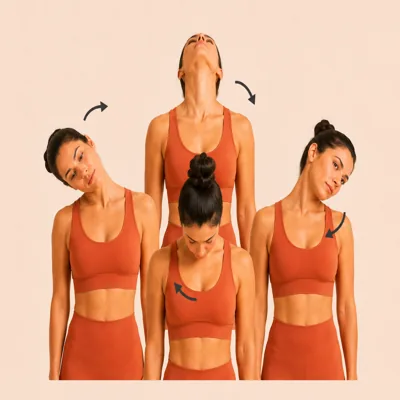
The four movements cover the neck in every direction it moves. Forward and backward bending takes it through flexion and extension. Side bending takes the ear toward each shoulder. Rotation turns the head to look over each shoulder. Circles then join those ranges together in one continuous movement.
The order is not arbitrary. The three single-plane movements come first and establish how far is comfortable in each direction. The circle comes last, because it passes through all of them and is the movement in which people most easily go further than they meant to.
The purpose is mobility rather than stretch. You are moving the joint through the range it already has, repeatedly and gently, which is what tends to relieve the stiffness of having held one position for hours. Pushing into the end of the range to feel a pull is a different intention and one the neck rewards poorly.
What people commonly report is that the sequence takes a minute or two and makes a noticeable difference to how the head sits afterwards. That is the honest scale of the claim. Persistent neck pain is a matter for a professional rather than a mobility drill.
How to practise it
-
Stand or sit tall
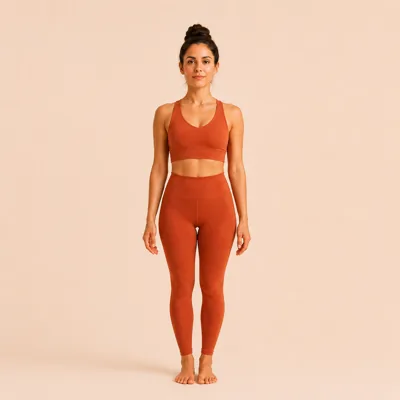
You can do these movements standing or sitting. Choose whichever is comfortable. Either way, let the spine rise gently tall, drop the shoulders away from the ears, and let the arms rest easily. Take a steady breath and let the face and jaw soften.
-
Forward & backward bend
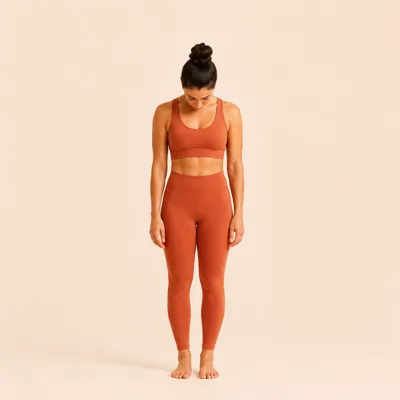
Exhale and slowly lower your chin towards your chest, letting the back of the neck lengthen. Then inhale and gently tilt your head back to look up, without crunching. Move smoothly between the two. Repeat for three slow rounds.
-
Side bends
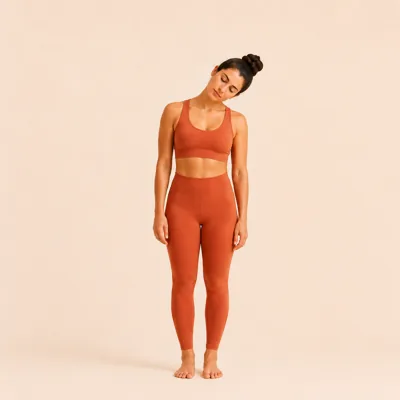
Tilt your left ear towards your left shoulder, keeping the shoulders level and relaxed, then tilt your right ear towards your right shoulder. Let the movement stay gentle. Repeat for three slow rounds each side.
-
Neck rotation
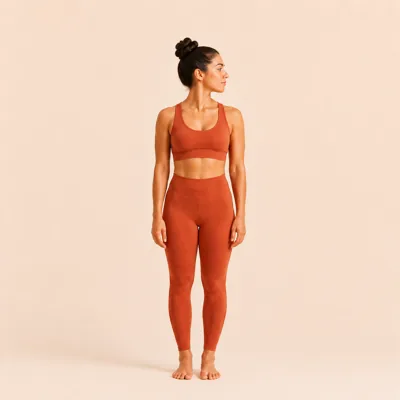
Keeping the head level, turn slowly to look over your left shoulder, then turn to look over your right shoulder. Let the turn come from the neck, not the shoulders. Repeat for three slow rounds each side.
-
Neck circles
Let your head roll in a slow, smooth circle clockwise, chin to chest, ear to shoulder, all the way around, then reverse and circle counterclockwise. Keep the circles small and comfortable. Repeat for three slow rounds each way.
How long and how often
Three slow rounds of each movement, which is two or three minutes for the whole sequence. You can do it standing or seated, whichever is comfortable.
It suits the start of a breathing or yoga practice, where it clears the tension that would otherwise make sitting upright uncomfortable. It also suits an hour into a working day at a desk, which is where most of the stiffness comes from.
There is no progression here. The movements do not get bigger over time and there is nothing to build toward. Doing them briefly and often is worth more than doing them thoroughly and rarely.
What usually goes wrong
Going for range. The neck is delicate and this is not a stretch to push into, which is what the app guide says directly. Move well within comfort in every direction. If something pinches, you have already gone too far.
Bringing the shoulder to the ear. In the side bends the ear goes toward the shoulder, and the shoulders stay level and relaxed. Lifting the shoulder to meet the head removes the movement entirely.
Turning from the shoulders. In the rotations the turn comes from the neck. If the chest and shoulders swing round with the head, the neck itself has barely moved.
Dropping the head back in the circles. Full circles that throw the head back are where people most often hurt themselves. Keep the circles small, and if the backward part is uncomfortable, do half circles through the front only.
Who should take care
Practise safely. Move slowly and never force a range that pinches or strains. The neck is delicate. Keep the movements small if your neck feels stiff. Stop and rest if you feel dizzy or any sharp pain, and check with a professional if you have a neck injury or condition. See our full Health & Safety Disclaimer.
Four movements, paced for you
PanchPrana walks through each of the four movements in order with the rounds counted, which is the simplest way to keep them slow when the temptation is to rush through. It is one of the 66 techniques that are free to practise in full, with no account needed.


Common questions
Should I do full neck circles?
Small ones. Large circles that drop the head all the way back are where most neck strain happens. If the backward portion is uncomfortable, do half circles through the front instead.
Standing or seated?
Either. The app leaves it open. What matters is that the spine is tall and the shoulders are dropped, which is easier for some people standing and for others in a chair.
How often can I do it?
As often as you like. It is gentle enough for several times a day, and short frequent sessions suit desk stiffness better than one long one.
It clicks when I move. Is that a problem?
Painless clicking is common and generally unremarkable. Sharp pain, dizziness, or anything that radiates into the arm is different, and worth stopping for and raising with a professional.
Should I feel a stretch?
Not really. This is mobility rather than stretching. A mild sense of movement and release is what you are after, not a pull at the end of the range.