On this page
The wrist does a great deal of small repetitive work and almost no deliberate movement. It is also the joint asked to carry body weight in table top, Cobra, Downward Dog and most of a sun salutation, which is a demand nothing else in a typing day prepares it for. Two minutes of mobility addresses both problems.
What it is
The sequence has two parts. First you extend the arms and move the hands back and then down, taking the wrist through extension and flexion. Then you circle the hands slowly at the wrist, clockwise and counterclockwise.
The movements are small and precise rather than large. The wrist has a modest range and the point is to use all of it gently, not to find an end position and press into it.
The practical case is twofold. Stiffness from typing and phone use is the common one, and it responds well to being moved. The other is preparation: going straight into weight-bearing on cold wrists is a reliable way to make them ache, and a minute of this beforehand makes a noticeable difference.
How to practise it
-
Extend the arms
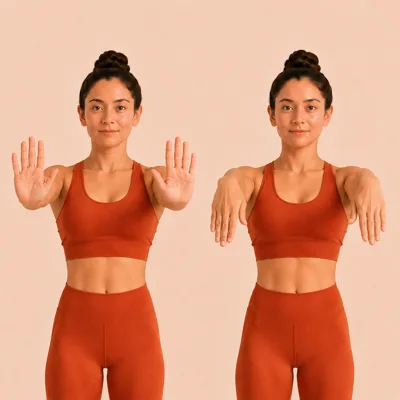
Sit or stand tall and extend the arms out in front of you. You can keep the elbows softly bent if that is more comfortable.
-
Flex and extend
Draw the hands back to extend the wrists, then drop the hands down to flex them, moving smoothly between the two for three rounds.
-
Wrist rotations
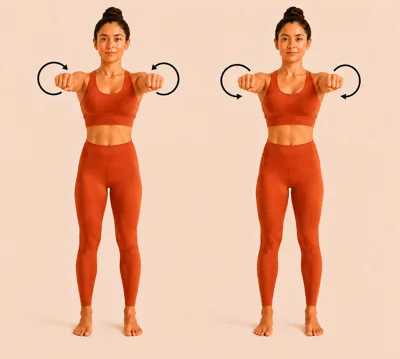
Now circle the hands slowly at the wrists, clockwise, then counterclockwise, for three rounds each way. Let the circles be smooth and easy.
How long and how often
Three rounds of flexing and extending, then three circles each way, standing or seated. The whole thing takes about two minutes.
Do it before any practice that puts weight on the hands, and at intervals during a day of typing. Keeping the elbows softly bent is fine and more comfortable for many people.
There is no progression. Small, slow and frequent is the whole method.
What usually goes wrong
Forcing the range. The wrist has a limited range and pressing into the end of it, particularly in extension, is how people irritate it. Move to comfortable and stop there.
Making the circles fast. Quick circling is a flick rather than a mobilisation. Slow enough to feel the whole circle is the pace.
Locking the elbows. Straight locked arms put tension into the whole chain and make the wrist movement smaller. A soft bend at the elbow is better.
Skipping it before weight-bearing. This is the one context where the sequence is doing more than relieving stiffness. Cold wrists asked to hold body weight in Downward Dog is a common source of complaint.
Who should take care
Practise safely. Keep the movements gentle and stop if there is any sharp pain. Make the circles smaller if the wrists feel stiff or tender. See our full Health & Safety Disclaimer.
Two minutes, before the wrists carry anything
PanchPrana runs the wrist sequence with the rounds counted, and it sits naturally at the start of any practice that puts weight on the hands. It is one of the 66 techniques that are free to practise in full, with no account needed.


Common questions
Will this help with typing stiffness?
Many people find that moving the joint regularly eases the stiffness that builds from repetitive use. It is a mobility drill rather than a treatment, and persistent wrist pain, numbness or tingling is worth having assessed.
Should I do it before yoga?
Yes, particularly before anything with weight on the hands. Table top, Cobra, Downward Dog and sun salutations all load the wrist, and a minute of preparation makes a difference.
Do I need to keep the arms straight?
No. A soft bend at the elbows is more comfortable and does not reduce the movement at the wrist.
How many circles?
Three each way is the app default. More is fine if it feels good; the direction matters more than the count, so do both.
What if my wrists hurt in Downward Dog?
Warm them up first with this sequence, spread the fingers wide and press through the whole hand rather than the heel of the palm, and bend the knees to take some weight back into the legs. If pain persists, have it looked at.