On this page
Most of the mobility work in this library asks for slow, controlled movement. This one is the exception. The arm swings are meant to be loose and rhythmic, with momentum carrying the arms rather than muscular effort pushing them, and trying to control them carefully makes the sequence worse rather than better.
What it is
There are two parts. First the arms swing wide open to the sides, opening across the chest, then swing back in and cross in front in a gentle hug. Then the arms come forward at about shoulder height and the elbows straighten and bend, taking that joint through its range.
The swing covers the chest and the front of the shoulders, which shorten from any amount of sitting forward, and it moves the upper back at the same time. The elbow work is included because it is a joint that gets almost no deliberate movement and stiffens quietly.
Letting momentum carry the swing is the instruction that matters. A swing driven by muscular effort is smaller, more tiring, and tends to hunch the shoulders up. A loose one moves further with less work, which is what warms the joint.
How to practise it
-
StandingPoseFront
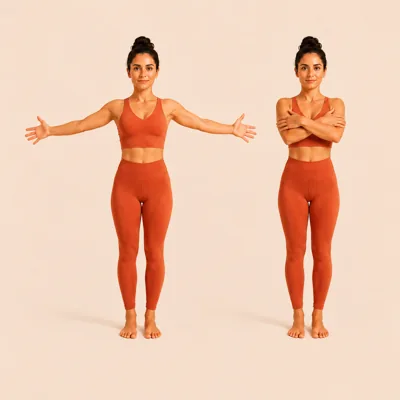
Stand tall with the feet about hip-width apart and the knees soft. Let the arms hang loosely by your sides and relax the shoulders.
-
Swing open and across
Swing both arms open wide to the sides, opening across the chest, then swing them back in and cross them in front of the chest in a gentle hug. Let the movement flow smoothly and repeat for three rounds.
-
Extend and flex the elbows
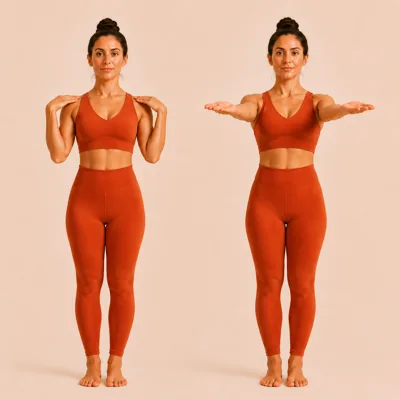
Bring the arms out in front of you, roughly at shoulder height. Straighten the arms to extend the elbows fully, then bend the elbows to bring the hands towards the shoulders. Move smoothly between the two for three rounds.
How long and how often
Three rounds of the swing and three of the elbow bends, standing or seated, which is two or three minutes.
It suits the start of a movement practice and any break from sitting. It pairs naturally with the shoulder sequence, which works the same region with smaller and slower movements.
Keep the swing smaller if that feels better. A smaller loose swing is more useful than a large forced one.
What usually goes wrong
Forcing the swing. Momentum should carry the arms. Driving them open with effort makes the movement smaller and brings the shoulders up around the ears.
Swinging too hard at the end range. A loose swing is not the same as a violent one. Throwing the arms open forcefully puts a sharp load on the front of the shoulder at the point where it is most open.
Locking the elbows. The elbows straighten fully but without snapping into a lock. Extend to straight, not past it.
Holding the breath. The breath should move easily with the swing. Rhythmic movement and held breath do not go together, and the sequence gets stiff when they are combined.
Who should take care
Practise safely. Keep the swing loose and comfortable, letting momentum carry the arms rather than forcing them. Ease off if the shoulders feel strained, and keep the swing smaller if that feels better. Keep the elbow bends gentle too, and stop if there is any pinch in the joint. See our full Health & Safety Disclaimer.
Two movements, three rounds each
PanchPrana runs the swings and the elbow work in order with the rounds counted, which keeps the rhythm steady enough for the swing to stay loose. It is one of the 66 techniques that are free to practise in full.


Common questions
Standing or seated?
Either. Standing gives the swing a little more freedom, but seated works well and is the practical option at a desk.
How hard should I swing?
Loose and comfortable, letting momentum do it. If the shoulders feel strained, make the swing smaller rather than working harder to control it.
Why include the elbows?
Because they get almost no deliberate movement in an ordinary day and stiffen without anyone noticing. It costs thirty seconds to include them.
Is this a stretch?
No. It is a warm-up. There should be a sense of opening across the chest but not a strong pull anywhere.
What if my shoulder catches during the swing?
Reduce the range until it stops catching. A smaller pain-free swing is doing the job; a larger one that pinches is not.