On this page
Bahya Kumbhaka is the pause after the exhale, held with the lungs empty. It is the mirror of Antar Kumbhaka and it is not the equal of it: holding on empty lungs produces the urge to breathe considerably sooner than holding on full ones, which is why the count here is shorter and why this is the retention beginners find difficult.
What it is
You exhale slowly and completely through the nose, then rest with the lungs empty and the belly relaxed for a short count, then let a smooth inhale come in on its own. The whole practice turns on two words in that description: completely, and relaxed.
The urge to breathe is driven mostly by rising carbon dioxide rather than by falling oxygen, and with the lungs empty that urge arrives faster. A hold that would be comfortable after an inhale can be genuinely uncomfortable after an exhale, and that is expected rather than a sign of poor capacity.
The belly staying soft is what distinguishes this from simply not breathing. Most people instinctively hold themselves empty by keeping the abdominal muscles engaged, which turns a rest into a brace. The instruction is to let the belly go entirely and simply not take the next breath yet.
The tradition associates the outer retention with stillness and settling, where the inner one is associated with focus. What people commonly report is that a short hold is noticeably quietening and a long one is not. Nothing further is claimed here.
How to practise it
-
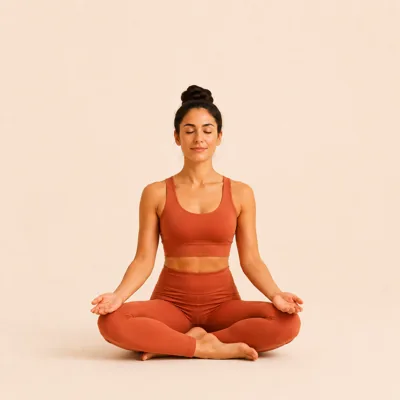
Sit comfortably
Settle into a comfortable seated posture with a tall, easy spine, and let the shoulders, face, and belly soften.
-
Exhale, then hold out
After a slow, complete exhale through the nose, rest with the lungs empty and the belly relaxed for a short count. Keep it easy. Never squeeze the air out or strain to stay empty.
-
Inhale again
When the hold is complete, let a smooth inhale come in on its own, without gasping. Take the next breath gently.
How long and how often
The app runs six rounds. Keep the hold short from the outset, shorter than you would use for Antar Kumbhaka. A count of two or three after a full exhale is a real practice.
Lengthen only over weeks, and never within a sitting. Choose the hold length before you begin and hold to it, including on the rounds that feel easy.
Practise on an empty stomach and sitting upright. As with the inner retention, this is not a practice to do lying down, when tired, or when already agitated.
What usually goes wrong
Squeezing the air out. The exhale should be slow and complete, not forced. Pressing the last of the air out engages the abdominal muscles you then need to relax, and it makes the hold much harder than it needs to be.
Holding yourself empty. Bracing the belly to stay empty is the commonest fault and turns a rest into an effort. Let the belly go completely; simply do not start the next inhale yet.
Using the same count as the inner retention. Empty holds are harder. If four counts is comfortable after an inhale, two or three is a realistic starting point after an exhale.
Gasping on the way back in. The inhale should arrive gently and on its own. If it is snatched, the hold was too long. Shorten it and stay there.
Who should take care
Practise safely. Lengthen the hold only over weeks, never in a single sitting. Skip or keep the hold very short if you are pregnant, or have high blood pressure, a heart condition, or glaucoma. Stop and breathe normally if you feel dizzy, strained, or anxious. See our full Health & Safety Disclaimer.
Six rounds, with the hold kept short
The empty hold is the one people misjudge, because it feels manageable for the first second and then does not. PanchPrana times it so the length is fixed in advance. Bahya Kumbhaka is one of the 66 techniques that are free to practise in full.


Common questions
Why is holding after the exhale harder?
The urge to breathe comes mostly from rising carbon dioxide, and with the lungs empty it builds sooner. A hold that is comfortable on a full breath will not be on an empty one.
How long should the hold be?
Short. Two or three counts after a complete exhale is a genuine practice, and shorter than you would use for the inner retention. Lengthen only over weeks.
Should my belly be pulled in?
No. The belly stays relaxed. Holding yourself empty with the abdominal muscles is the most common mistake and makes the hold far harder.
Who should avoid it?
Skip the hold or keep it very short if you are pregnant or have high blood pressure, a heart condition, or glaucoma. Stop and breathe normally if you feel dizzy, strained or anxious.
Should I learn the inner retention first?
It is the sensible order. Antar Kumbhaka is the more comfortable of the two and teaches you what a soft hold feels like before you attempt the harder one.