On this page
Retention is the part of pranayama that the counted practices introduce a little at a time. Box breathing gives you four counts of it inside a larger pattern; triangle breathing gives you one side of three. Antar Kumbhaka takes the pause after the inhale and makes it the practice, which is why the app files it as advanced rather than as another counted breath.
What it is
Antar Kumbhaka is the suspension of the breath after a full, easy inhale. You breathe in through the nose without over-filling, suspend the breath with the throat and face soft, and then let a slow, smooth exhale flow out. Every breath around the hold stays unforced.
The word soft is doing a great deal of work in that description. There is a real difference between resting with the breath in and clamping down to keep it there. The first is the practice. The second builds pressure in the chest and throat and is where the cautions come from.
The tradition treats kumbhaka as the centre of pranayama and the two retentions as its two halves, with the inner one associated with steadying the mind and sharpening focus. What people commonly report is that a short comfortable hold is noticeably quietening. Claims beyond that would need clinical evidence and are not made here.
This is a practice with real contraindications rather than general cautions, and they are set out in full below. If you are pregnant, or have high blood pressure, a heart condition, or glaucoma, the guidance is to skip the hold or keep it very short.
How to practise it
-
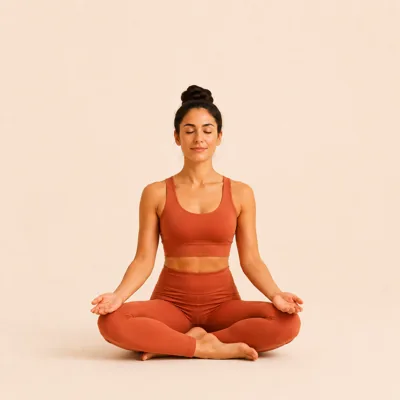
Sit comfortably
Settle into a comfortable seated posture with a tall, easy spine, and let the shoulders, face, and throat soften.
-
Inhale, then hold in
After a full, easy inhale through the nose, suspend the breath with the throat and face soft. Do not clamp down. Start with a hold no longer than your inhale.
-
Release smoothly
When the hold is complete, let a slow, smooth exhale flow out. Every breath around the hold should stay unforced.
How long and how often
The app runs six rounds. Start with a hold no longer than your inhale: if you breathe in for four, hold for four and no more. That is the ceiling for the first weeks, not the starting point you improve on within a session.
Lengthen only over weeks, and never within a single sitting. The temptation to add a count because this round felt easy is the specific way people get into trouble with retention. Pick a hold length before you begin and keep it for the whole session.
Practise on an empty stomach, sitting upright with the spine long. Do not practise retention lying down, and do not practise it when tired or agitated.
What usually goes wrong
Clamping the throat. The most important fault to avoid. The breath rests in the lungs; the throat does not seal it in. If you feel pressure in the throat, ears or head, the hold has become a clamp and should stop.
Over-filling the inhale. A hold on an over-full breath is uncomfortable within seconds and encourages the clamp. Inhale to comfortable, not to capacity.
Lengthening the hold mid-session. Retention lengthens over weeks. Adding counts as you go is how a comfortable practice becomes a strained one within five rounds.
Gasping on the release. If the exhale bursts out or the next inhale is snatched, the hold was too long. The release should be slow and smooth by choice, not by relief.
Who should take care
Practise safely. Lengthen the hold only over weeks, never in a single sitting. Skip or keep the hold very short if you are pregnant, or have high blood pressure, a heart condition, or glaucoma. Stop and breathe normally if you feel dizzy, strained, or anxious. See our full Health & Safety Disclaimer.
Six rounds, with the hold timed
The hardest part of retention practice is not extending the hold when a round feels easy. PanchPrana times the hold so the length is decided before you start rather than in the moment. Antar Kumbhaka is one of the 66 techniques that are free to practise in full.


Common questions
How long should the hold be?
To begin with, no longer than your inhale. If you inhale for four, hold for four. Lengthen only gradually across weeks, never within a session.
What is the difference between Antar and Bahya Kumbhaka?
Antar Kumbhaka is the hold after the inhale, with the lungs full. Bahya Kumbhaka is the hold after the exhale, with the lungs empty. The inner one is generally the more comfortable of the two.
Who should avoid it?
Skip the hold, or keep it very short, if you are pregnant or have high blood pressure, a heart condition, or glaucoma. Stop and breathe normally if you feel dizzy, strained or anxious.
Should I feel pressure in my head or ears?
No. That is a sign the throat is clamping rather than resting. Release the hold, breathe normally, and use a shorter hold next time.
Do I need to learn other practices first?
It is much easier if you have. Triangle breathing gives you a short retention inside a simple pattern, and box breathing gives you two. Arriving here from those is a gentler path than starting with retention on its own.