On this page
Box breathing gives the breath four equal sides: in for four, hold for four, out for four, hold for four. It is used well beyond yoga, which is unusual for a practice with two retentions in it, and the reason is that an even four-sided rhythm is easy to remember under pressure. The part worth knowing before you start is that the four sides are not equally easy.
What it is
The pattern traces a square. Each phase is the same length, and the cycle repeats without a break. At a four count that is sixteen counts to a round, which puts you at roughly four breaths a minute, well below an ordinary resting rate.
The two holds are different experiences. A retention on a full breath is comfortable for most people and can be held a good while. A retention on an empty one produces air hunger much sooner, because the urge to breathe is driven by rising carbon dioxide rather than by falling oxygen. The fourth side is therefore the one that decides your count, and the one beginners tend to cut short without noticing.
The even rhythm is what the practice is for. Where a longer exhale settles you down, four matched sides tend to leave you level and attentive, which is why it is reached for before something demanding rather than at bedtime. What people commonly report is steadier focus rather than drowsiness. Claims that it improves performance under stress would need clinical evidence and are not made here.
How to practise it
-
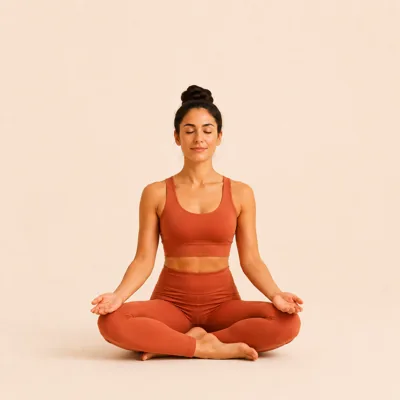
Sit comfortably
Choose any steady seated posture. Cross-legged on the floor, or feet flat on the floor in a chair. Let the shoulders drop and the spine rise gently tall.
-
Trace the square
Inhale for four, hold for four, exhale for four, hold for four. Then begin again. Imagine drawing one side of a square with each count.
-
Hold softly
The holds are pauses, not clenches. Keep the throat and face relaxed and simply let the breath rest for the count, without gripping.
How long and how often
The app runs five rounds at a four count, which is a little over a minute. That is a sensible session for learning the shape. Ten rounds is a full practice once four counts are comfortable.
Lengthen all four sides together, four to five to six, and only when the current count is genuinely easy on every side including the last. Six is a substantial practice at twenty-four counts a round. There is no reason to go beyond it without a teacher.
Practise it upright and on a reasonably empty stomach. It suits the working day and the half hour before something that needs concentration. If the aim is sleep, a longer exhale does that better and without retention.
What usually goes wrong
Letting the fourth side shrink. The hold after the exhale quietly gets shorter as the session goes on, and the square turns into a triangle with a stub. If you cannot hold the fourth side at four, the whole practice should be at three.
Clenching through the holds. The holds are pauses, not a breath sealed in or out against pressure. The throat, face and shoulders stay soft. Gripping is a sign the count is too long, not that you need to try harder.
Over-filling on the inhale. Taking a large breath to survive the first hold makes every subsequent side harder and brings the shoulders up. Keep the inhale ordinary.
Starting here rather than arriving here. Two retentions is a lot for a first counted practice. Equal breathing has none and triangle breathing has one; both are better places to start, and box breathing is more comfortable when you come to it from them.
Who should take care
Practise safely. Start with a four-count and only lengthen once it feels easy. If the holds cause any tension or breathlessness, shorten them or leave them out. Not recommended during pregnancy or with uncontrolled blood pressure without guidance from a teacher or doctor. See our full Health & Safety Disclaimer.
Five rounds, four sides, counted aloud
Sixteen counts a round is more than most people want to track while also keeping two retentions soft. PanchPrana cues every side so you can close your eyes and follow, and box breathing is one of the 66 techniques that are free to practise in full.


Common questions
Which hold is harder?
The one after the exhale, almost always. Holding on empty lungs brings on the urge to breathe sooner than holding on full ones. Set your count by that side rather than by the easy one.
What count should I start at?
Four. Use three if four feels tight anywhere in the cycle. Lengthen only when every side of the square is comfortable, and lengthen all four together.
Is box breathing safe in pregnancy?
The app does not recommend it during pregnancy, or with uncontrolled blood pressure, without guidance from a teacher or doctor. The retentions are the reason. Equal breathing gives you the same even rhythm with no holds at all.
How is it different from triangle breathing?
Triangle breathing drops the fourth side, so there is no hold after the exhale. That removes the hardest part and makes it the gentler practice of the two.
Can I practise it lying down?
Sitting upright suits it better, because retention is easier to keep soft when the spine is long and the ribs are free. Lying down tends to encourage a bigger inhale, which makes the holds harder.