On this page
Bow Pose is named for a drawn bow, with the arms as the string and the body as the bow. That image tells you how it works: a bowstring does not pull the bow into shape, it holds while the bow presses against it. The legs kicking into the hands make the pose. Pulling with the arms does not.
What it is
From lying on your front you bend both knees, reach back and hold the outsides of the ankles, and on an inhale press the ankles into your hands to lift the thighs and chest away from the floor. You breathe steadily in the shape and lift only as high as feels easy.
The pressing is everything. If the legs kick back against the hands, the chest and thighs rise as a consequence and the shoulders stay comfortable. If the arms haul the ankles closer instead, the shoulders take a load at the end of their range and the backbend becomes forced.
It opens the whole front of the body, strengthens the back, and stretches the shoulders and thighs, which makes it the strongest of the three prone backbends in the library. Cobra and Locust are the sensible preparations for it.
The caution list is longer than for the other two: the app says to avoid it in pregnancy or with back, neck or shoulder problems.
How to practise it
-
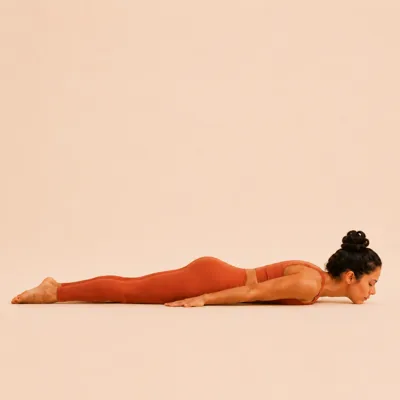
Lie on your front
Lie on your front with the legs extended behind you, together and touching, and the arms resting alongside the body.
-
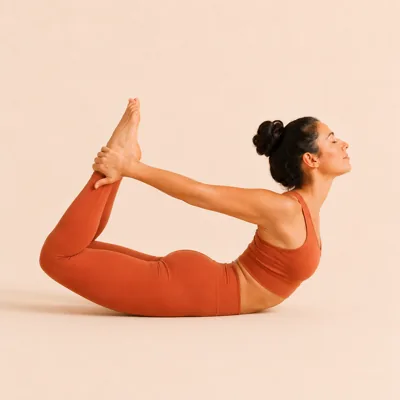
Hold the ankles and lift
Bend both knees and reach back to hold the outsides of the ankles. Breathe in and press the ankles into your hands to lift the thighs and chest away from the floor, opening into the bow shape. Keep the knees roughly hip-width and the shoulders drawing back.
-
Hold the Bow Pose
Keep breathing as you hold, lifting only as high as feels easy.
-
Come back to Prone
Exhale and gently release the ankles, lowering the chest and thighs back down to the mat, returning to lying flat on your front.
How long and how often
A few steady breaths in the shape, then release on an exhale and rest. One or two rounds is a reasonable practice.
Lift only as high as is comfortable. Height is a product of the kick, not a target to reach for.
Rest afterwards in Crocodile or Child's Pose. This is a strong shape and it wants a counter.
What usually goes wrong
Pulling with the arms. The kick of the legs into the hands does the work, not wrenching the shoulders. This is the app instruction and the single thing that distinguishes a good Bow from an uncomfortable one.
Holding the breath. The chest is compressed against the floor and lifting, which makes breathing harder and more important. Keep breathing throughout the hold.
Going straight to Bow. Cobra and Locust prepare the back for this shape. Arriving at Bow without them is where most lower-back complaints come from.
Forcing the knees together. Hip-width knees are fine and considerably kinder to the lower back than squeezing them together at the top of the lift.
Who should take care
Practise safely. Lift only as high as is comfortable. The kick of the legs into the hands does the work, not wrenching the shoulders. Ease off if the lower back pinches. Avoid if pregnant or if you have back, neck, or shoulder issues. See our full Health & Safety Disclaimer.
One bow, held and breathing
PanchPrana cues the press of the ankles into the hands rather than the pull, which is the instruction that keeps the shoulders out of trouble. Bow Pose is one of the 66 techniques that are free to practise in full, with no account needed.


Common questions
Should I pull my ankles toward me?
No. Press the ankles back into the hands and let the lift happen. Pulling loads the shoulders at the end of their range.
How high should I lift?
Only as high as feels easy. The height is a result of the leg action, not a target.
I cannot reach my ankles.
A strap around the ankles held in each hand is the usual solution. Locust Pose is also a good place to build toward it.
Who should avoid it?
The app says to avoid it if pregnant, or if you have back, neck or shoulder problems. It is the strongest of the prone backbends.
What should I do afterwards?
Rest. Crocodile Pose or Child's Pose both work well as a counter to a strong backbend.