On this page
Camel is the strongest backbend in the library and the one where the accessible version is most often treated as a failure. Keeping the hands on the lower back rather than reaching for the heels is a complete Camel Pose. Reaching the heels adds depth, and depth is not what makes the pose work.
What it is
You kneel with the knees hip-width apart, spine tall and shoulders relaxed. Then you lift the chest up and begin to arch back, leading with the heart. If it is available, the hands reach back toward the heels; otherwise they stay supporting the lower back.
The hips pressing forward over the knees is the structural instruction. If the hips sink back as the chest goes back, the whole shape folds at the waist and the lower back takes it. Hips forward keeps the arch distributed through the upper back and chest, where it belongs.
Leading with the chest rather than the head is the other one. The head follows the chest, and only if the neck is comfortable. Dropping the head back first is how people finish this pose with a sore neck.
It opens the chest, throat and the whole front of the body, which is a strong sensation and one reason to come out of it slowly and sit for a moment afterwards.
How to practise it
-
Seated Posture
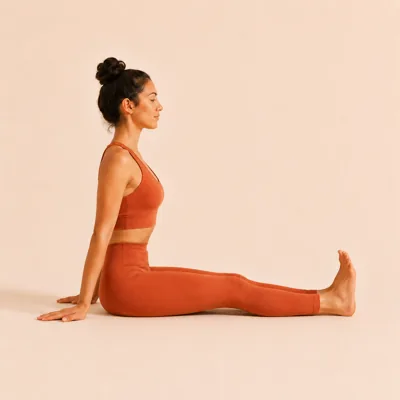
Sit tall with your legs extended straight out in front of you, feet flexed and spine long. Rest your hands beside your hips. Take a few breaths here to settle before kneeling up.
-
Kneel tall
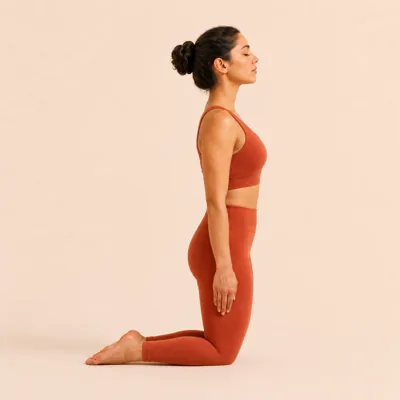
Kneel with the knees hip-width apart. Spine tall and shoulders relaxed.
-
Lift and arch back
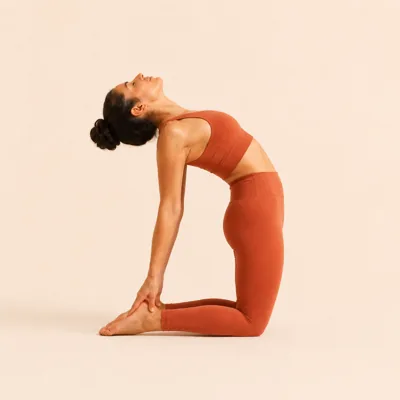
Lift the chest up and gently begin to arch back, leading with the heart. If it's available, reach your hands back towards your heels; otherwise keep them supporting the lower back.
-
Breathe and release
Keep the hips pressing forward over the knees, let the head follow the chest only if the neck is comfortable, and breathe.
-
Kneel tall
Come up slowly, leading with the chest, until you're kneeling upright again.
-
Seated Posture
Sit back down with your legs extended straight in front of you. Rest your hands beside your hips and let the spine settle, allowing the backbend to integrate before you move on.
How long and how often
A few steady breaths in the shape. This is not a pose to hold for long, particularly at first.
Come up slowly, leading with the chest, and then sit for a moment and let the backbend settle before moving on. The app builds that pause into the sequence deliberately.
Take care if you have neck, lower-back or knee problems. The knees are worth noting: you are kneeling with weight on them throughout, so a folded blanket underneath is sensible.
What usually goes wrong
Letting the hips sink back. The hips press forward over the knees throughout. If they travel backward as you arch, the pose folds at the waist and the lower back takes the load.
Dropping the head back first. The chest leads and the head follows only if the neck is comfortable. Never drop the head back if the neck feels strained, which is what the app says directly.
Treating hands-on-the-back as a lesser version. It is a complete Camel. Reaching the heels adds depth to a pose that does not need depth to work.
Coming up quickly. Rise slowly, leading with the chest. Coming out of a strong backbend fast is disorientating and hard on the lower back.
Who should take care
Practise safely. Keep the hands on the lower back rather than reaching the heels if that is enough, and never drop the head back if the neck feels strained. Come out slowly. Take care if you have neck, lower-back, or blood-pressure issues. See our full Health & Safety Disclaimer.
A strong pose, entered slowly
PanchPrana enters and leaves Camel through kneeling and seated positions, with a pause afterwards to let the backbend settle. It is one of the 66 techniques that are free to practise in full, with no account needed.


Common questions
Do I have to reach my heels?
No. Keeping the hands on the lower back is a complete version of the pose and the right choice for most people most of the time.
Where should my hips be?
Pressing forward over the knees, and staying there as you arch. Hips sinking back is the most common fault and it moves the bend into the lower back.
Should I drop my head back?
Only if the neck is genuinely comfortable, and only after the chest has lifted. Keeping the chin slightly tucked is a perfectly good option.
My knees hurt when kneeling.
Put a folded blanket under them. You are kneeling with weight on the knees for the whole pose, and padding makes a real difference.
Who should take care?
The app advises care with neck, lower-back or knee issues. Come out slowly, and use the hands-on-the-back version rather than reaching for depth.