On this page
Every other breathing practice on this list asks you to change something. This one asks you to change nothing at all. That sounds like the easy option and it is usually the hardest, because there is no count to hold and no target to hit, so there is nothing to hide behind. It is also the practice everything else is built on, which is why it is worth learning first rather than last.
What it is
Natural breath awareness is exactly what the name says. You sit, you let the breath carry on as it already is, and you pay attention to it. You do not deepen it, slow it, or even out. If the breath is short and high today, you watch a short, high breath.
The tradition treats this as the foundation of pranayama: before you regulate the breath you learn to observe it, because a breath you have never watched is a breath you cannot feel yourself changing. What people commonly report after a few minutes is that the breath slows by itself once it is being watched, and that this is noticeably different from making it slow. Whether attention alone produces a measurable physiological shift is a claim that would need clinical evidence, and it is not one this post makes.
The practical value is smaller and more reliable than that. Watching the breath is a skill, and every technique in the app assumes you have it. Belly breathing needs you to notice which hand is moving. Extended exhale needs you to notice whether the next inhale arrived easily or in a gasp. That noticing is what this practice trains.
How to practise it
-
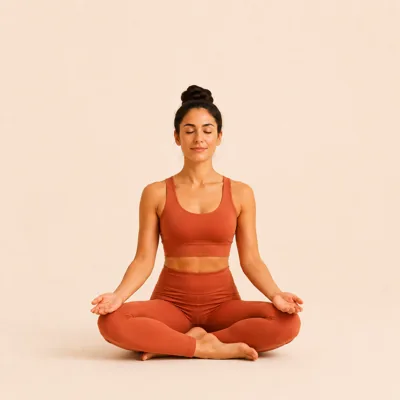
Sit comfortably
Choose any steady seated posture. Cross-legged on the floor, or feet flat on the floor in a chair. Let the shoulders drop and soften the face and jaw.
-
Watch, don't control
Let the breath move entirely on its own. Notice the cool air at the nostrils on the inhale and the warm air on the exhale. Feel the belly and ribs rise and fall.
-
Return, gently
The mind will wander. That is normal. Each time you notice, simply bring your attention back to the breath, without judgement. That returning is the practice.
How long and how often
The app runs this as a three-minute practice, and three minutes is a sensible daily dose. It is long enough that the mind will wander at least once, which is the part that matters, and short enough that you will actually do it.
There is no progression to work through and no count to lengthen. If you want more, sit for longer rather than doing anything differently: five minutes, then ten. Sitting daily for three minutes does more than sitting once a week for twenty.
It suits any time of day and does not need an empty stomach, which separates it from most of the active practices. Many people use it as a settling minute before a stronger technique, which is how the guided sessions in the app tend to open.
What usually goes wrong
Treating a wandering mind as failure. The mind wandering and you noticing is one complete repetition of the practice. A session where you drifted twenty times and returned twenty times is a good session, not a bad one. People give this practice up because they think they are bad at it, having misunderstood what it is asking.
Quietly improving the breath. The instinct to deepen the breath the moment you start watching it is almost universal. It turns the practice into a different one. If you catch yourself lengthening the exhale, let it go back to whatever it was doing before you looked.
Waiting to feel calm. Checking whether it is working is its own kind of alertness, and it keeps the session busy. Watch the breath, let the three minutes run, and judge afterwards.
Sitting somewhere you have to hold yourself up. A posture that takes effort competes for the attention the practice needs. A chair with your feet flat on the floor is not a lesser option than a cross-legged seat.
Who should take care
Practise safely. This practice is safe for everyone and can be done any time of day. If watching the breath ever feels uncomfortable, just rest your attention on the body or the sounds around you instead. See our full Health & Safety Disclaimer.
Three minutes, timed for you
PanchPrana runs natural breath awareness as a timed practice so you are not opening your eyes to check the clock, and it is one of the 66 techniques that are free to practise in full, with no account needed.


Common questions
Is breath awareness the same as meditation?
It overlaps closely. Breath awareness is one of the oldest meditation objects, and many meditation traditions begin exactly here. The distinction the app draws is practical rather than philosophical: breath awareness watches the breath specifically, where a meditation session may move the attention elsewhere.
How long before it does anything?
Most people notice the breath settling within the first minute or two of a session, which is immediate and unremarkable. The more useful change, being able to tell what your breath is doing without stopping to check, builds over weeks of short daily sits rather than in any single session.
What should I do when I cannot stop thinking?
Nothing different. Notice that you were thinking, return to the breath, and expect to do that again shortly. There is no version of this practice where thoughts stop arriving.
Can I do this lying down?
Yes, though it is easier to fall asleep. Lying down suits it well at night, when falling asleep is not a problem. Sitting suits it better during the day.
Is it safe for everyone?
This is the gentlest practice in the app and it suits anyone. The one exception worth naming is that some people find watching the breath makes them anxious rather than calm. If that happens, rest the attention on the body or on the sounds around you instead, which is what the app suggests too.