On this page
Surya Namaskar is the longest guide in the library and the one with the most moving parts: twelve postures, each with its own breath, run twice to make one complete round. Underneath the length there is a single rule that makes the whole sequence make sense, and once you have it the poses largely order themselves.
What it is
The rule is this: inhale as you stretch up or open back, exhale as you fold or bend forward. Every one of the twelve poses follows it. If you lose track of the breath partway through, that rule tells you what the next one should be without having to remember the list.
The sequence moves from standing, through a forward fold, into a lunge and Downward Dog, down to the floor for Knees Chest and Chin and a low Cobra, back through Downward Dog and a lunge on the other side, and up through the forward fold to standing again. It warms the whole body and links every movement to a breath.
One point catches almost everyone. Twelve poses is half a round, not a whole one. You repeat the entire sequence leading with the other leg, stepping the left leg back in pose four instead of the right, and only then have you completed one round. Leading with each leg once is what makes the body work evenly.
The individual shapes are all techniques in their own right, and several of them are worth learning separately before running them together. Prayer Pose, Raised Arms Pose, Standing Forward Bend and Cobra all have their own guides.
How to practise it
-
Before you begin
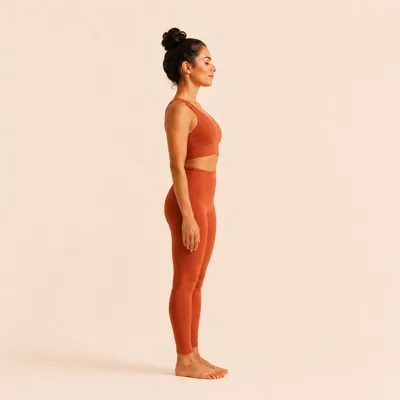
Roll out your mat on a firm, level surface and stand barefoot at the front of it. Practise on an empty stomach. First thing in the morning is ideal. Keep the body relaxed and the movements slow and smooth; this is not a workout to push through. If anything pulls or pinches, ease off. Beginners should learn the twelve shapes first, then add the breathing, then slowly build up the number of rounds.
-
Breathe with the movement
The golden rule: inhale as you stretch up or open back, exhale as you fold or bend forward. Breathe smoothly through the nose and let each breath lead the movement rather than rushing the body to keep up. If you lose the rhythm, simply pause, breathe naturally, and rejoin.
-
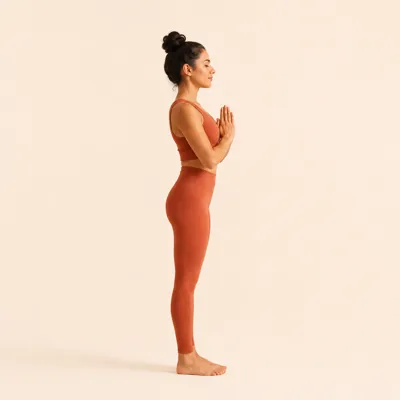
Pose 1, Prayer Pose (Pranamasana)
Stand tall with feet together, weight even and shoulders soft. Bring your palms together at the centre of your chest and exhale fully. Take a moment to settle and feel steady before you begin.
-
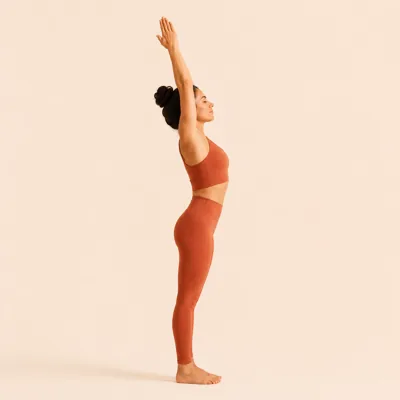
Pose 2. Raised Arms Pose (Hasta Uttanasana)
Inhale and sweep both arms up alongside your ears, then gently arch back, leading with the chest rather than crunching the lower back. Keep the arms shoulder-width apart if that feels easier, and look up only as far as is comfortable for your neck.
-
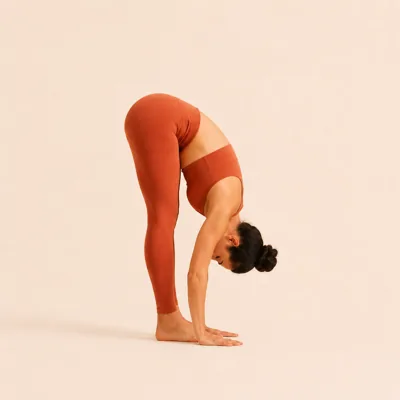
Pose 3, Standing Forward Bend (Uttanasana)
Exhale and hinge forward from the hips, letting the head and arms hang towards the floor. Bend your knees as much as you need, beginners should keep a generous bend, and rest your hands on the floor, your shins, or blocks. Let the neck relax completely.
-
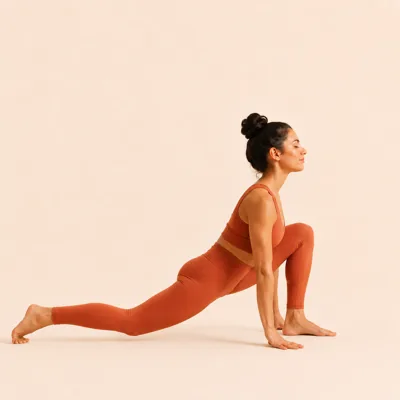
Pose 4, Low Lunge (Ashwa Sanchalanasana)
Inhale and step your right leg far back, lowering the back knee to the mat. Keep the front knee stacked over the ankle, lift the chest, and gaze gently forward. Resting the back knee down makes this welcoming and stable for beginners.
-
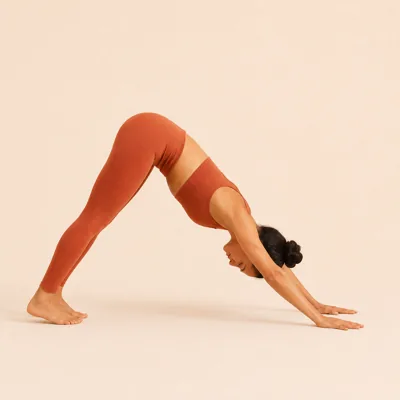
Pose 5. Downward Dog (Adho Mukha Svanasana)
Exhale and step the other foot back to meet it, lifting your hips up and back into an inverted V shape. Bend the knees freely and let the heels reach towards the floor without forcing. Press the floor away with your hands and lengthen the spine.
-
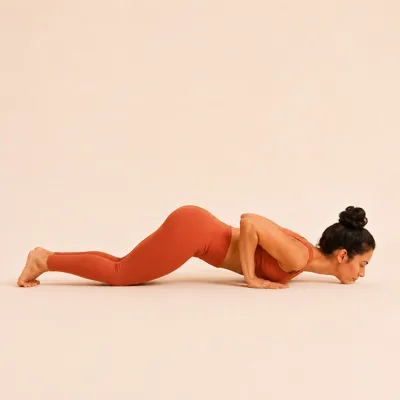
Pose 6. Knees, Chest & Chin (Ashtanga Namaskara)
Keeping the breath out, lower the knees first, then the chest, then the chin gently to the mat, keeping the hips lifted. Hug the elbows in close to the body. Lower slowly and rest as much weight on the mat as you like.
-
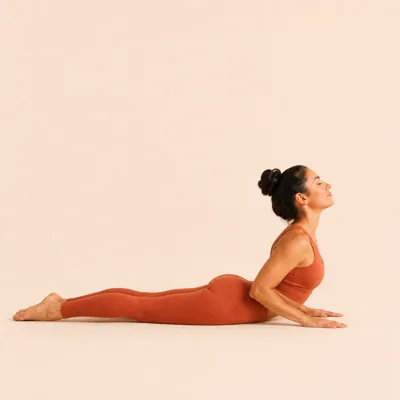
Pose 7, Cobra Pose (Bhujangasana)
Inhale and slide your chest forward and up into a low, gentle Cobra. Keep the elbows bent and close to the body and the shoulders drawing down away from the ears. Lift only as high as feels easy on the lower back. A small lift is perfect.
-
Pose 8. Downward Dog (Adho Mukha Svanasana)
Exhale and press your hips up and back into Downward Dog once more. The same inverted V you made in Pose 5. Keep the knees soft, lengthen the spine, and let the heels ease towards the floor.
-
Pose 9, Low Lunge (Ashwa Sanchalanasana)
Inhale and step your left foot forward between your hands into a Low Lunge, lowering the back knee to the mat. Lift the chest and gaze gently forward.
-
Pose 10, Standing Forward Bend (Uttanasana)
Exhale and bring the back foot forward to meet the front, folding into Standing Forward Bend. Keep a generous bend in the knees and let the head and arms hang heavy, just as in Pose 3.
-
Pose 11. Raised Arms Pose (Hasta Uttanasana)
Inhale and rise all the way up with a flat back, sweeping both arms overhead and gently arching back. The same shape as Pose 2. Lead with the chest and keep the lower back comfortable.
-
Pose 12, Prayer Pose (Pranamasana)
Exhale and bring the palms back together at the centre of your chest, returning to where you started. Stand tall and steady. You have now completed one half of a round.
-
Completing one full round
Repeat the entire twelve-pose sequence leading with the other leg. This time stepping the left leg back in Pose 4. Leading with each leg once makes one complete round, so the body works evenly on both sides.
-
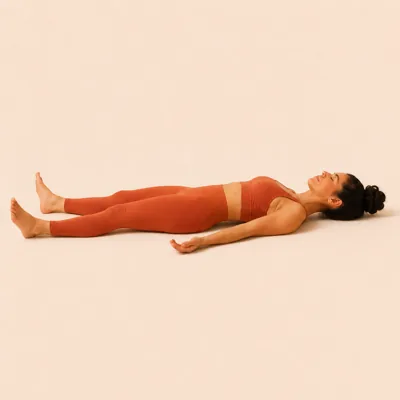
Rest and absorb (Shavasana)
When you finish all your rounds, lie down on your back, let the feet fall open and the arms rest by your sides with palms up. Stay still and watch the natural breath for a few minutes, letting the effects of the practice settle.
How long and how often
One to three rounds to begin with, adding more only as stamina grows. The app guide is direct about not rushing the count, and a round is more work than it looks written down because it contains two passes through twelve poses.
Learn the shapes first without worrying about speed. The flow comes with repetition, and trying to move quickly through poses you are still recalling is how the breathing rule gets abandoned.
Practise on an empty stomach, ideally in the morning, on a firm level surface and barefoot. Finish by lying in Shavasana for a few minutes and watching the natural breath, which is part of the practice rather than an optional extra.
Rest whenever you need to. Stopping midway through a round to breathe is a reasonable thing to do and not a failed attempt.
What usually goes wrong
Counting twelve poses as a round. Twelve poses is one half. A complete round leads with each leg once, so it is twenty-four poses. Counting halves as rounds means one side of the body gets all the work.
Rushing to keep a pace. The breath leads the movement, not the other way around. If you are hurrying the body to keep up with a rhythm, slow the whole thing down.
Straight legs in the forward bend. Bend the knees generously in Standing Forward Bend, particularly as a beginner. Forcing straight legs rounds the lower back and achieves nothing the sequence needs.
Pushing up into a high Cobra. Pose seven is a low, gentle Cobra with the elbows bent and close to the body. A small lift is correct here; a full straight-armed backbend is not what the sequence is asking for.
Who should take care
Practise safely. Start with just 1 to 3 rounds and add more only as your stamina grows. Never rush the count. Stop and rest if you feel dizzy, breathless, or any sharp pain. If you are pregnant, or have high blood pressure, a hernia, or a back or heart condition, check with your doctor and a qualified teacher before practising. Consistency matters far more than intensity. See our full Health & Safety Disclaimer.
Twelve poses, one at a time
PanchPrana walks through each of the twelve postures slowly with the breath cued, which is the only practical way to learn a sequence this long without stopping to check what comes next. The Strength and Stamina course then builds the number of rounds. Surya Namaskar is one of the 66 techniques that are free to practise in full.


Common questions
How many poses are in a round?
Twelve poses make one half. A complete round runs the sequence twice, leading with the right leg once and the left leg once, so the body works evenly on both sides.
What is the breathing rule?
Inhale as you stretch up or open back, exhale as you fold or bend forward. Every pose in the sequence follows it, so it doubles as a way to work out the next breath if you lose track.
How many rounds should a beginner do?
One to three, adding more only as stamina builds. The app is explicit about not rushing the count.
When should I practise it?
On an empty stomach, ideally first thing in the morning. It is warming and energising, which suits the start of a day better than the end of one.
Who should avoid it?
The app gives cautions for pregnancy, high blood pressure, and hernia among others, which are set out in full above. Stop and rest if you feel dizzy, breathless, or any sharp pain.