On this page
Surya Bhedan is alternate nostril breathing with the alternating removed. Every inhale comes through the right nostril and every exhale leaves through the left, round after round. Fixing the direction is what gives it a character rather than a balance, and the character it is aiming at is warmth and alertness.
What it is
The name means sun-piercing. The right nostril is associated in the tradition with warmth, energy and activity, and drawing every breath in through it is understood to emphasise those qualities. The left is associated with cooling and quiet, which is why Chandra Bhedan, the lunar breath, reverses the pattern exactly.
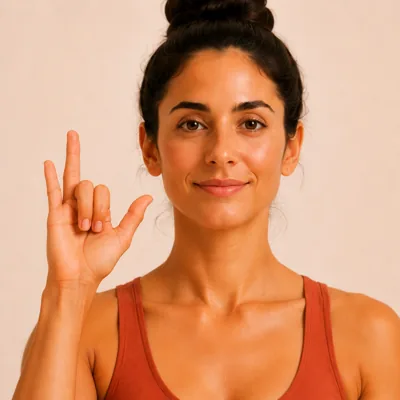
The mechanics are the same as Nadi Shodhan. You use Vishnu Mudra with the right hand, folding the index and middle fingers toward the palm so that the thumb closes the right nostril and the ring finger closes the left. Close the left, inhale right; close the right, exhale left. That is one round.
What can honestly be said is that the tradition is clear and consistent about the directional associations, and that many people report a mild lift from this practice and a settling from its mirror. Whether nostril dominance produces the physiological effects described would need clinical evidence, and that claim is not made here.
The practical value does not depend on resolving that. A slow, quiet, single-nostril breath done for a few minutes in the morning is a reasonable way to start a day, and the fixed direction gives the practice a clear identity that makes it easy to choose between this and its cooling counterpart.
How to practise it
-
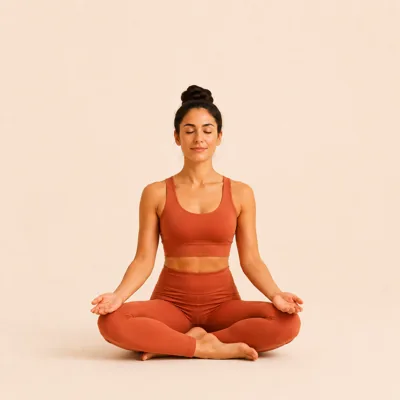
Sit comfortably
Settle into a comfortable seated posture with a tall, easy spine, and let the shoulders and face soften.
-
The hand position (Vishnu Mudra)
Use the right hand: fold the index and middle fingers towards the palm, so the thumb closes the right nostril and the ring finger closes the left.
-
Right in, left out
Close the left nostril and inhale slowly through the right. Then close the right and exhale through the left. Keep every breath smooth and quiet. That is one round.
How long and how often
The app runs ten rounds, which is three or four minutes at a slow pace. That is a complete session and there is no progression to climb.
Keep every breath smooth and quiet. There is no retention in this practice, and no ratio: the inhale and exhale can be about equal.
Time of day matters more here than dose. It is warming and stimulating, so it belongs in the morning or at a point in the day where a lift is wanted. Avoid it in the evening, in hot weather, or when you already feel overheated.
What usually goes wrong
Pressing hard on the nostril. The finger seals the nostril; it does not push the nose sideways. Firm enough to close, light enough that the face stays relaxed.
Alternating by accident. The direction is fixed. If you find yourself inhaling left on alternate rounds you have drifted back into Nadi Shodhan, which is a balancing practice rather than a warming one.
Practising it when already agitated. This is a stimulating breath. If you are anxious or overheated it is the wrong choice, and the app says so directly. Chandra Bhedan or extended exhale suits that state.
Making the breath forceful. Energising here means warming rather than vigorous. The breath stays slow and quiet throughout; the effect comes from the direction, not from effort.
Who should take care
Practise safely. Because it is warming and stimulating, avoid Solar Breath in the evening, in hot weather, or if you feel overheated, anxious, or have high blood pressure. Keep the breath gentle and stop if you feel lightheaded. See our full Health & Safety Disclaimer.
Ten rounds, with the hand position taught first
PanchPrana walks through Vishnu Mudra before the rounds begin and then counts them for you, so the only thing to keep track of is which nostril is open. Solar breath is one of the 66 techniques that are free to practise in full.


Common questions
Which nostril do I breathe in through?
The right, every time. The exhale always leaves through the left. Unlike Nadi Shodhan, the direction never swaps.
What hand position should I use?
Vishnu Mudra with the right hand: index and middle fingers folded toward the palm, thumb on the right nostril, ring finger on the left. The same hand position as alternate nostril breathing.
When should I practise it?
Morning, or when you want a gentle lift. Avoid it in the evening, in hot weather, or if you feel overheated, anxious, or have high blood pressure.
How is it different from alternate nostril breathing?
Nadi Shodhan alternates the direction each round and aims at balance. Surya Bhedan fixes the inhale on the right throughout and aims at warmth and alertness.
Is there a cooling equivalent?
Yes. Chandra Bhedan, the lunar breath, mirrors it exactly: inhale left, exhale right, and it suits the evening.