On this page
Warrior 1 asks for two things at once that pull against each other: a deep lunge, which wants a long stance, and hips facing forward, which a long stance makes difficult. Most of the discomfort people report in this pose comes from resolving that tension in the lower back rather than by shortening the stance.
What it is
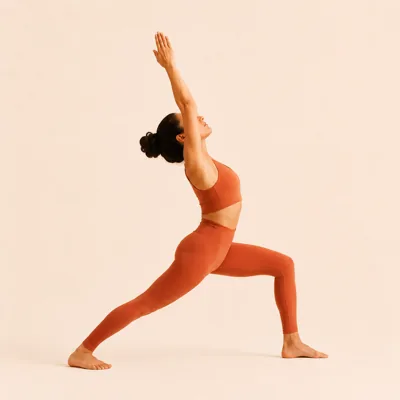
From standing you step one foot back and turn it out slightly so the whole foot grounds, keeping the hips facing forward as much as is comfortable. Then you bend the front knee toward a right angle, stacking it over the ankle, and sweep both arms up alongside the ears, lifting the chest.
The front knee over the ankle is the load-bearing instruction. A knee that travels past the toes moves the work from the thigh onto the joint. If the knee is creeping forward, the stance is too short or you have sunk too low.
The hips facing forward is the one that is genuinely hard, because squaring the pelvis while the back foot is turned out requires rotation the hips may not have. The phrase in the guide is important: as much as is comfortable. Forcing the pelvis square instead twists the lower back.
Shortening the stance is the single adjustment that fixes most of this. A shorter step back makes it easier to square the hips and easier to keep the knee stacked, and the pose still works the legs.
How to practise it
-
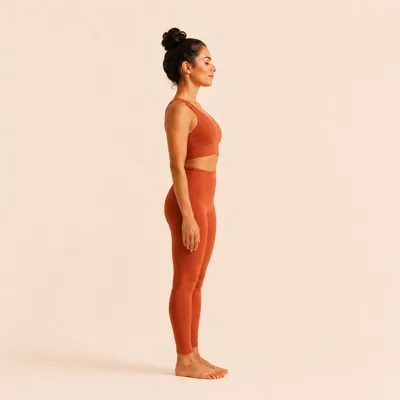
Begin in standing
Start standing tall at the front of your mat, feet grounded and weight even, arms relaxed by your sides.
-
Step back and ground
From standing, step your right foot back and turn it out slightly so the whole foot grounds. Keep the hips facing forward as much as is comfortable.
-
Bend and lift
Bend the front (left) knee towards a right angle, stacking the knee over the ankle. Sweep both arms up alongside the ears, lift the chest, and reach tall.
-
Return to standing
Straighten the front leg and step the back foot forward to meet the front, returning to standing before you switch sides.
-
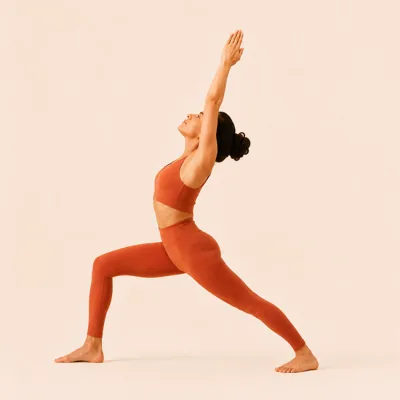
Hold, then change sides
Hold, breathing steadily and grounding down through both feet. Rise up and step forward, then repeat with the left foot stepping back.
-
Finish in standing
Finish by stepping the feet together and returning to a tall, even standing position.
How long and how often
Hold each side for several steady breaths, grounding down through both feet. Step back to standing between sides rather than switching directly.
Work both sides evenly. Warrior poses are strongly one-sided and the second side is the one that gets short measure.
Lower the arms or bring the hands to the chest if the shoulders tire before the legs do. That is the app suggestion and it keeps the focus where it belongs.
What usually goes wrong
Front knee past the toes. Keep the knee stacked over the ankle. Past the toes moves the load onto the knee joint, which is the main thing to avoid here.
Forcing the hips square. Face them forward as much as is comfortable. Wrenching the pelvis around against tight hips puts the rotation into the lower back.
A stance that is too long. It is the usual cause of both problems above. Shorten it if the back feels strained, which is what the guide advises.
Arching the lower back to reach up. The arms lift and the chest opens, but the ribs should not thrust forward. Lengthen up rather than bending back.
Who should take care
Practise safely. Keep the front knee over the ankle, never past the toes, and shorten the stance if the back feels strained. Lower the arms or keep them at the chest if the shoulders tire. Ease off if you have knee, hip, or shoulder issues. See our full Health & Safety Disclaimer.
Both sides, through standing
PanchPrana steps back to standing between the two sides, which resets the stance and makes it much harder to give one leg more than the other. Warrior 1 is one of the 66 techniques that are free to practise in full, with no account needed.


Common questions
Where should my front knee be?
Stacked over the ankle, never past the toes. If it creeps forward, shorten the stance or come up slightly.
My hips will not face forward.
That is normal. Face them forward as much as is comfortable rather than forcing it. A shorter stance makes squaring them considerably easier.
My lower back aches in this pose.
Usually a stance that is too long, or forcing the hips square. Shorten the step back first; it fixes most cases.
What if my shoulders tire?
Lower the arms, or bring the hands together at the chest. The legs are doing the main work.
How is it different from Warrior 2?
Warrior 1 has the hips facing forward and the arms overhead. Warrior 2 opens the hips to the side with the arms reaching out in opposite directions.