On this page
Chair Pose has the most useful self-test of any posture in the library. If you can wiggle your toes, your weight is in your heels and the pose is working. If you cannot, the weight has slid forward onto the balls of the feet, the knees have travelled past the toes, and the legs are doing something other than what was intended.
What it is
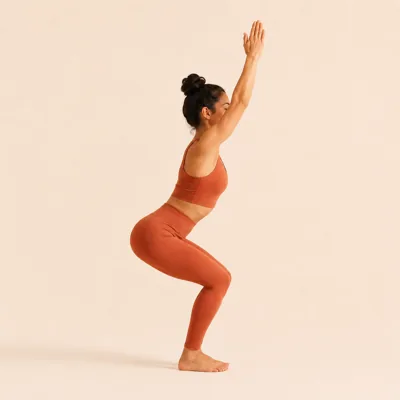
From standing you bend the knees and sink the hips back and down as if lowering into an invisible chair, keeping the weight in the heels, then sweep the arms up alongside the ears and lift the chest.
Sitting back is the whole action. The hips travel backward as much as downward, which is what keeps the shins relatively upright and loads the thighs and glutes. Sinking straight down instead pushes the knees forward over the toes and moves the load onto the knee joint.
Keeping the chest lifted stops the pose collapsing into a forward hunch. As the legs tire the torso tends to fold toward the thighs, and at that point you are holding a squat rather than the pose.
It builds heat and stamina quickly and works the legs, back and core together, which is why it is a short hold rather than a long one.
How to practise it
-
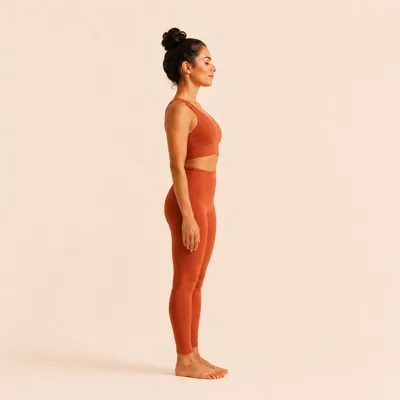
Standing Pose
Begin in a relaxed standing position, arms by your sides, breathing naturally.
-
Sit back and reach up
Bend the knees and sink the hips back and down as if sitting into a chair, keeping the weight in the heels. Sweep the arms up alongside the ears and lift the chest.
-
Hold the pose
Keep the spine long and the chest lifted, breathe steadily, and hold as long as feels strong. Rise up to stand to release.
-
Standing Pose
Return to a relaxed standing position, letting the breath settle before moving on.
How long and how often
Hold as long as feels strong, which the app leaves deliberately open. That is usually less time than people expect, and stopping while the form is still good is the right call.
Rise up to stand to release, then let the breath settle before going again.
Lower the arms or bring the hands to the chest if the shoulders tire before the legs do, which is common. The legs are the point.
What usually goes wrong
Weight in the toes. Use the test: you should be able to wiggle your toes. If you cannot, sit the hips further back until you can.
Knees collapsing inward. The knees track in line with the feet. Letting them fall together is a common fault as the legs fatigue and is hard on the joint.
Hunching forward. Keep the spine long and the chest lifted. Folding toward the thighs is a sign the hold has gone on too long.
Holding on grimly. This is a strength pose and the form degrades before the strength runs out. Come up while it still looks like the pose.
Who should take care
Practise safely. Keep the weight in the heels, you should be able to wiggle the toes, and don't let the knees collapse inward. Lower the arms or keep them at the chest if the shoulders tire, and ease off if the knees complain. See our full Health & Safety Disclaimer.
Hold as long as it stays strong
PanchPrana enters and leaves Chair Pose from a settled standing position, which makes it easier to notice when the form has gone rather than pushing through. It is one of the 66 techniques that are free to practise in full, with no account needed.


Common questions
How do I know my weight is in the right place?
Try to wiggle your toes. If you can, the weight is in the heels. If you cannot, sit the hips further back.
Should my knees go past my toes?
No. Sitting the hips back keeps the shins relatively upright. Knees travelling forward over the toes puts the load on the knee joint.
My shoulders tire before my legs.
Lower the arms or bring the hands together at the chest. The app suggests this directly, and the legs are what the pose is for.
How long should I hold it?
As long as the form holds. That is often twenty or thirty seconds, and stopping there is better than a longer hold with collapsed knees and a hunched back.
Why do my knees ache?
Usually weight forward or knees collapsing inward. Sit further back, track the knees over the middle toes, and ease off if it persists.