On this page
Bull Pose is a stacked seated shape held one side at a time, and it is one of the more demanding hip positions in the library. It is also a pose where the difference between the two sides is often noticeable, which is exactly why the guide insists on holding each for the same length.
What it is
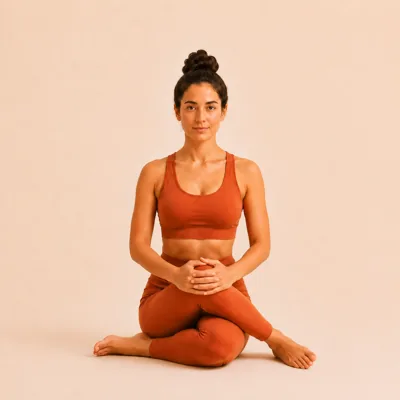
From sitting with the legs extended, you draw one ankle in toward the opposite hip so that shin rests on the floor, then stack the other shin on top with the knees settling close together. You hold with a tall spine and an even breath, then unstack one leg at a time and repeat on the other side.
The stacking is what makes it strong. Bringing one knee directly over the other requires external rotation at both hips at the same time, which is a range most people have unevenly. Finding one side considerably harder is normal rather than a sign of doing it wrong.
The breath is the regulator. The instruction is to let the breath stay easy and never strain to hold the shape. If you find yourself holding the breath to stay in it, the pose needs support or less depth.
It builds stability through the hips and lower body and is grounding to hold, which is why it appears as a steady seated posture rather than as a stretch to push into.
How to practise it
-
Seated
Sit on the mat with your spine tall and legs extended in front of you.
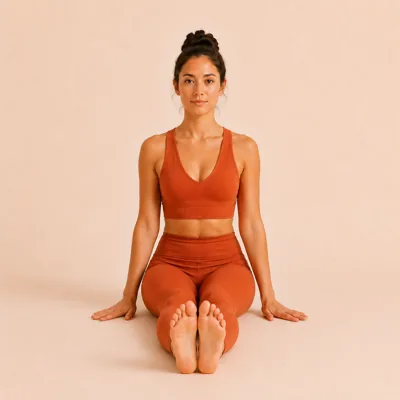
-
Bull Pose Right Side
Draw your left ankle in toward your right hip so the left shin rests on the floor, then stack your right shin on top with the right knee settling close to your left knee, and the right foot extending out to the side. Clasp your hands over the top knee.
-
Release the pose
Gently unstack the legs one at a time, extend both out in front of you.
-
Bull Pose left side
Come into the pose on the other side and hold for the same length.
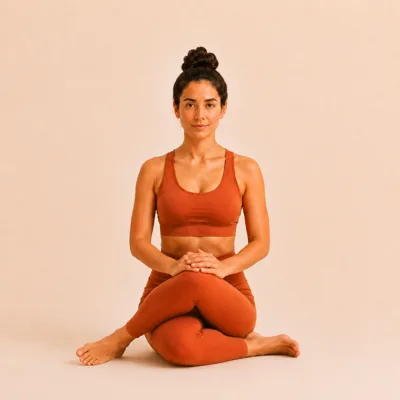
-
Release and relax
Release gently and extend your legs to come back to seated posture
How long and how often
Hold each side for the same length, several steady breaths at least. Timing both sides equally matters more here than in most poses because the difference between them is often large.
Unstack the legs gently, one at a time, rather than pulling them apart together.
Use support under the hips or the knees if needed. Sitting up on a cushion in particular reduces the demand on the hips considerably.
What usually goes wrong
Forcing the knees to stack. If the top knee will not settle over the bottom one, sit up on a cushion or leave a gap. Pressing the knee down loads the joint rather than opening the hip.
Holding the breath. The guide says to let the breath stay easy. A held breath is the clearest sign the shape has gone past comfortable.
Giving the easy side longer. Time both sides equally. The harder side is the one that needed the time.
Ignoring a pinch in the knee. A pinch means the rotation is happening at the knee rather than the hip. Come out and add support under the hips.
Who should take care
Practise safely. Let the breath stay easy. Never strain to hold the shape. Use support under the hips or knees if needed, and ease off if anything pinches. See our full Health & Safety Disclaimer.
Both sides, the same length
PanchPrana returns to a seated position between sides and holds each for the same time, which is the discipline this pose most needs. Bull Pose is one of the 66 techniques that are free to practise in full, with no account needed.


Common questions
My knees will not stack. What should I do?
Sit up on a cushion, which reduces the rotation demanded of the hips, and leave a gap between the knees rather than pressing the top one down.
Why is one side so much harder?
Hip rotation is commonly uneven between sides. It is normal, and it is the reason for holding both for the same length rather than by feel.
Where should I feel it?
In the outer hips. A pinch in the knee means the rotation is coming from the wrong joint and the position needs changing.
How long should I hold?
Several steady breaths on each side, and the same on both. Let the breath stay easy throughout.
Can I use support?
Yes. Under the hips or under the knees, both are standard and neither makes it a lesser version.