On this page
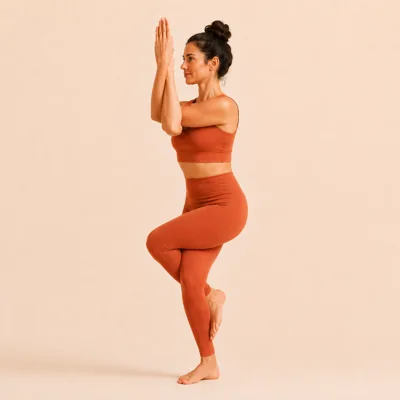
Eagle Pose asks you to balance on one slightly bent leg while wrapping the other around it and crossing the arms in the opposite configuration. That is a lot of instructions at once, which is why it is worth knowing from the start that the foot hook is optional and a wall is available.
What it is
You bend the knees slightly, cross one thigh over the other and hook that foot behind the opposite calf. Then you cross the opposite arm under the first in front of you, bend the elbows and bring the backs of the hands or the palms together, lift the elbows, sink the hips gently, and fix the gaze.
The arms and legs wrap in opposite configurations: if the right thigh crosses over, the left arm goes under. Getting this the wrong way round is the most common confusion, and the app cues it explicitly for each side.
The stretch is across the upper back and the shoulders, which the arm wrap opens, and through the outer hips, which the leg wrap opens. Drawing everything to the midline is also what makes it a concentration pose: there is enough happening that the attention has nowhere else to go.
The simplified version is to skip the foot hook and simply cross the thighs, which the guide suggests directly. It keeps the whole upper body work and removes most of the balance difficulty.
How to practise it
-
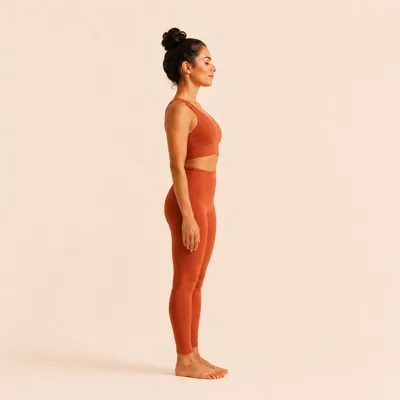
Standing Pose
Begin in a relaxed standing position, arms by your sides, breathing naturally.
-
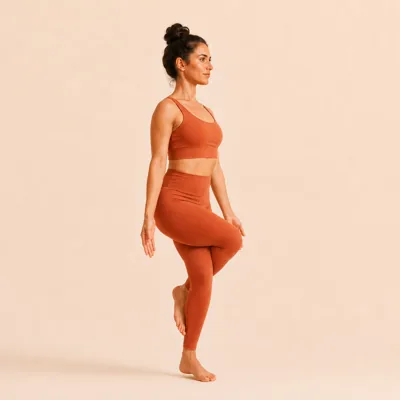
Wrap the legs
Bend the knees slightly. Cross your right thigh over the left and hook the right foot behind the left calf. Rest a hand on support if you need it.
-
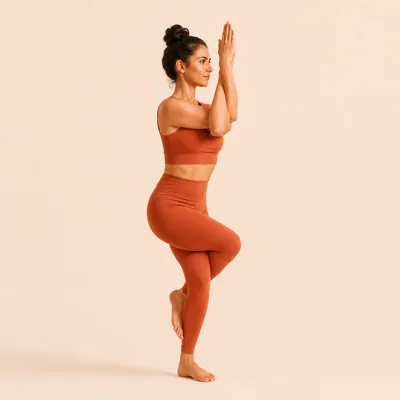
Wrap the arms and balance
Cross the left arm under the right in front of you, bend the elbows, and bring the backs of the hands or the palms together. Lift the elbows and sink the hips gently. Fix your gaze, breathe.
-
Release the pose
Release your arms and legs and relax in standing position, before repeating this other side.
-
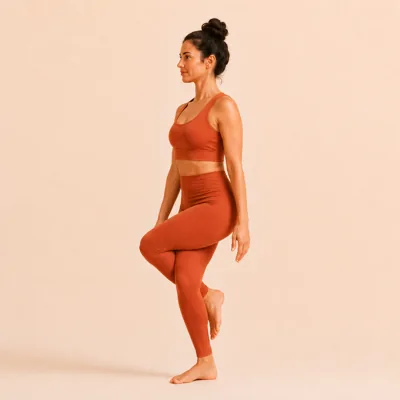
Wrap the legs
Bend the knees slightly. Cross your left thigh over the right and hook the left foot behind the right calf. Rest a hand on support if you need it.
-
Wrap the arms and balance
Cross the right arm under the left in front of you, bend the elbows, and bring the backs of the hands or the palms together. Lift the elbows and sink the hips gently. Fix your gaze, breathe.
-
Release the pose
Release your arms and legs and relax in standing position.
How long and how often
Several steady breaths on each side, releasing back to standing in between. Wrap one way on the first side and the other way on the second so both are covered.
Move into it slowly. Assembling the wrap in a hurry is how people lose the balance before the pose has begun.
Use a wall for support whenever you need it and keep the standing knee soft.
What usually goes wrong
Wrapping the arms the same way as the legs. They go in opposite configurations. If the right thigh is on top, the left arm goes under.
Insisting on the foot hook. Crossing the thighs without hooking the foot is the app-suggested version and it keeps everything else intact.
Locking the standing knee. Keep it soft. The knees stay slightly bent throughout, which is what allows the wrap and the balance.
Hunching the shoulders up. Lift the elbows and let the shoulders draw down. The arm wrap tends to bring the shoulders up toward the ears, which closes the stretch you are trying to create.
Who should take care
Practise safely. Skip the foot hook and just cross the thighs if balance is hard, and use a wall for support. Keep the standing knee soft. Ease off if the knees or shoulders feel strained. See our full Health & Safety Disclaimer.
Both wraps, both sides
PanchPrana releases fully to standing between sides and cues which limb goes where, which is the part that is genuinely confusing the first few times. Eagle Pose is one of the 66 techniques that are free to practise in full, with no account needed.


Common questions
What if I cannot hook my foot?
Skip the hook and just cross the thighs. The app suggests exactly this, and it keeps the upper body work and most of the hip stretch.
Which arm goes under?
The opposite one to the thigh on top. Right thigh over means left arm under, and the reverse on the second side.
Can I use a wall?
Yes. The app recommends it if balance is difficult, and it lets you work on the wrap rather than on staying upright.
My hands will not reach palm to palm.
Bring the backs of the hands together instead, which is the easier version and equally valid.
Where should I look?
Fix the gaze on one point in front of you. A steady gaze does a lot of the work in any balance pose.