On this page
The side body gets almost no attention. Forward bends and back bends between them cover the front and the back, and the long muscles down the sides of the ribs and waist are left out of both. The standing side bend addresses them, and it depends entirely on one instruction: lengthen up before you bend over.
What it is
You stand tall with the feet about hip-width apart and the weight even, reach up, and lean gently over to the left, lengthening the right side of the body. Then back through centre and over to the right. Three rounds each side, alternating slowly.
The lengthening is what makes it a stretch rather than a slump. If you simply lean sideways from a normal standing height, the ribs on the lower side compress and the ones on the upper side barely move. Reaching up first creates the space that the bend then takes you into.
Opening the side ribs has a direct connection to breathing. The ribcage expands sideways as much as forward, and three-part breath in particular asks you to feel that widening. Tight side body makes that part of the breath difficult to find.
How to practise it
-
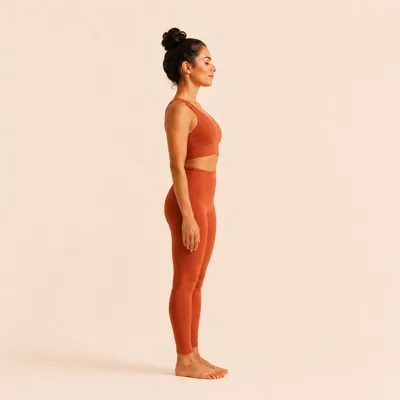
Stand tall
Stand tall with the feet about hip-width apart and the weight even. Let the arms rest by your sides and lengthen up through the crown of the head.
-
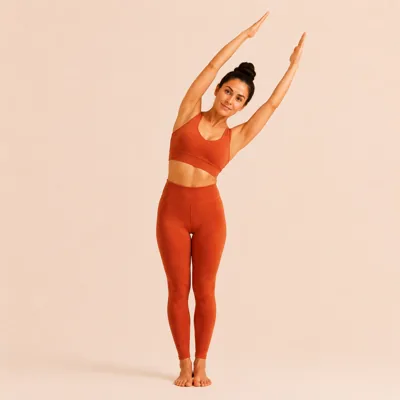
Bend side to side
Reach up and lean gently over to the left, lengthening the right side of the body, then come back through centre and bend to the right. Alternate slowly for three rounds each side.
How long and how often
Three rounds each side, alternating, which takes a couple of minutes. Keep both sides even, which is easier said than done since most people have a preferred direction.
It suits a warm-up before movement or breathing practice, and a break from sitting. It pairs well with the standing back bend and standing twist, which between them cover the other directions the spine moves.
Keep the bend small if the lower back feels sensitive.
What usually goes wrong
Bending without lengthening first. Leaning sideways from a collapsed standing position compresses the lower ribs and does very little for the upper side. Reach up, then over.
Lifting a foot. Both feet stay grounded with the weight reasonably even. Letting the opposite foot lift turns the bend into a lean and takes the stretch out of the waist.
Twisting while bending. The bend is sideways only. Rotating the chest toward the floor as you go over changes the shape into something else and puts an awkward load on the lower back.
Going deeper on the easy side. Most people have one side that goes further. Match the range to the stiffer side rather than the looser one.
Who should take care
Practise safely. Lengthen up and over rather than collapsing down, and keep both feet grounded. Keep the bend small if the lower back feels sensitive, and don't push past what feels comfortable. See our full Health & Safety Disclaimer.
Three rounds each side
PanchPrana counts the rounds so both sides get the same, which is the part that quietly slips when one side moves more easily. It is one of the 66 techniques that are free to practise in full, with no account needed.


Common questions
Should both feet stay flat?
Yes. Keeping both feet grounded with even weight is what keeps the stretch in the side body rather than turning it into a lean.
How far should I bend?
Only as far as feels comfortable, and after lengthening up. Keep it small if the lower back feels sensitive.
Where should I feel it?
Along the side of the ribs and the waist on the upper side, the one you are lengthening. If you feel it mainly in the lower back, you are probably bending without lengthening first.
Can I do this seated?
Yes, and it works well at a desk. Standing gives a little more freedom through the hips.
Does it help with breathing?
It opens the side ribs, which is the direction the ribcage expands most in the middle stage of a three-part breath. Many people find that part easier to feel after side bending.