On this page
Vajrasana is the alternative seat worth knowing about, and it has one property no other posture in the library shares: it is traditionally recommended even shortly after eating, where nearly everything else asks for an empty stomach. It is also a more stable seat than cross-legged for anyone whose hips do not open easily.
What it is
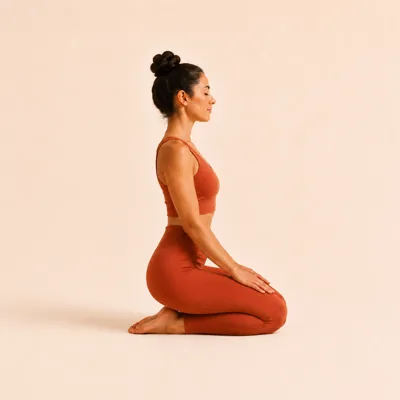
You kneel and sit the hips back onto the heels, with the big toes touching or close, the spine gently tall, the hands resting on the thighs and the shoulders soft. It is a simple shape with very little to get wrong.
The stability comes from the wide base and the fact that the pelvis sits level without needing the hips to open. People who find cross-legged sitting a constant negotiation often find this seat holds itself.
It gently stretches the ankles and the tops of the feet, which is where most of the discomfort comes from at first. That eases with practice, and a cushion under the ankles removes it in the meantime.
The tradition holds that it aids digestion, which is the basis of the after-meal recommendation. That is what the tradition says. Whether it does so measurably would need evidence, and the practical point stands regardless: it is the seat available when the others are not.
How to practise it
-
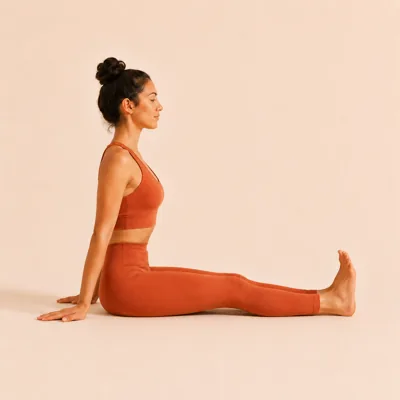
Staff Pose
Sit on the floor with the legs extended straight out in front, feet flexed, hands resting beside the hips, spine rising tall.
-
Thunderbolt Pose
Bend the knees and fold the legs back to kneel, sitting your hips back onto your heels with big toes touching or close. Let the spine rise gently tall, rest the hands on the thighs, and soften the shoulders down. Relax the face and breathe steadily.
-
Staff Pose
Lift the hips off the heels and extend the legs back out in front, returning to a seated position with the spine tall and hands resting beside the hips.
How long and how often
As long as it stays comfortable, which at first may be a minute or two and later much longer. It works as a seat for any of the breathing practices.
Place a cushion between the hips and the heels if the knees, ankles or feet feel strained. This raises the hips and takes most of the load off the ankles, and it is the standard adjustment rather than a concession.
Come out and shake the legs if they go numb. That is the app instruction and it is worth following rather than sitting through.
What usually goes wrong
Sitting through ankle pain. The tops of the feet and the ankles take the stretch, and at first it can be sharp. A cushion under the ankles or between the hips and heels solves it. Enduring it does not make it improve faster.
Slumping back. The spine rises gently tall. Once the shape becomes comfortable it is easy to settle back into a slouch, which undoes the reason for choosing it as a breathing seat.
Using it with knee problems. The app says to take care if you have knee issues, and deep knee flexion under load is the concern. A cushion between hips and heels reduces it considerably; a different seat may be better.
Assuming numbness will pass. Numb legs mean the position is restricting circulation. Come out rather than waiting.
Who should take care
Practise safely. Place a cushion between the hips and heels, or under the ankles, if the knees, ankles, or feet feel strained. Come out and shake the legs if they go numb, and take care if you have knee issues. See our full Health & Safety Disclaimer.
A steadier seat, guided
PanchPrana walks in and out of Thunderbolt through Staff Pose, which is the part that protects the knees. It is one of the 66 techniques that are free to practise in full, with no account needed.


Common questions
Can I really practise it after eating?
It is one of the few postures traditionally recommended shortly after a meal, which is a longstanding view rather than a clinical claim. Practically, it is the seat available when the empty-stomach practices are not.
My ankles hurt. What can I do?
Place a cushion under the ankles, or between the hips and the heels, which takes most of the load off. The discomfort usually eases with regular practice.
Is it suitable with knee problems?
Take care. It involves deep knee flexion with body weight on top. A cushion between the hips and heels reduces the angle considerably, but a cross-legged seat or a chair may suit better.
How long can I sit in it?
As long as it is comfortable. Come out and shake the legs if they go numb rather than waiting for it to pass.
Is it a good seat for breathing practice?
Yes, and a very stable one. It is a common alternative for people who find cross-legged sitting hard to hold.